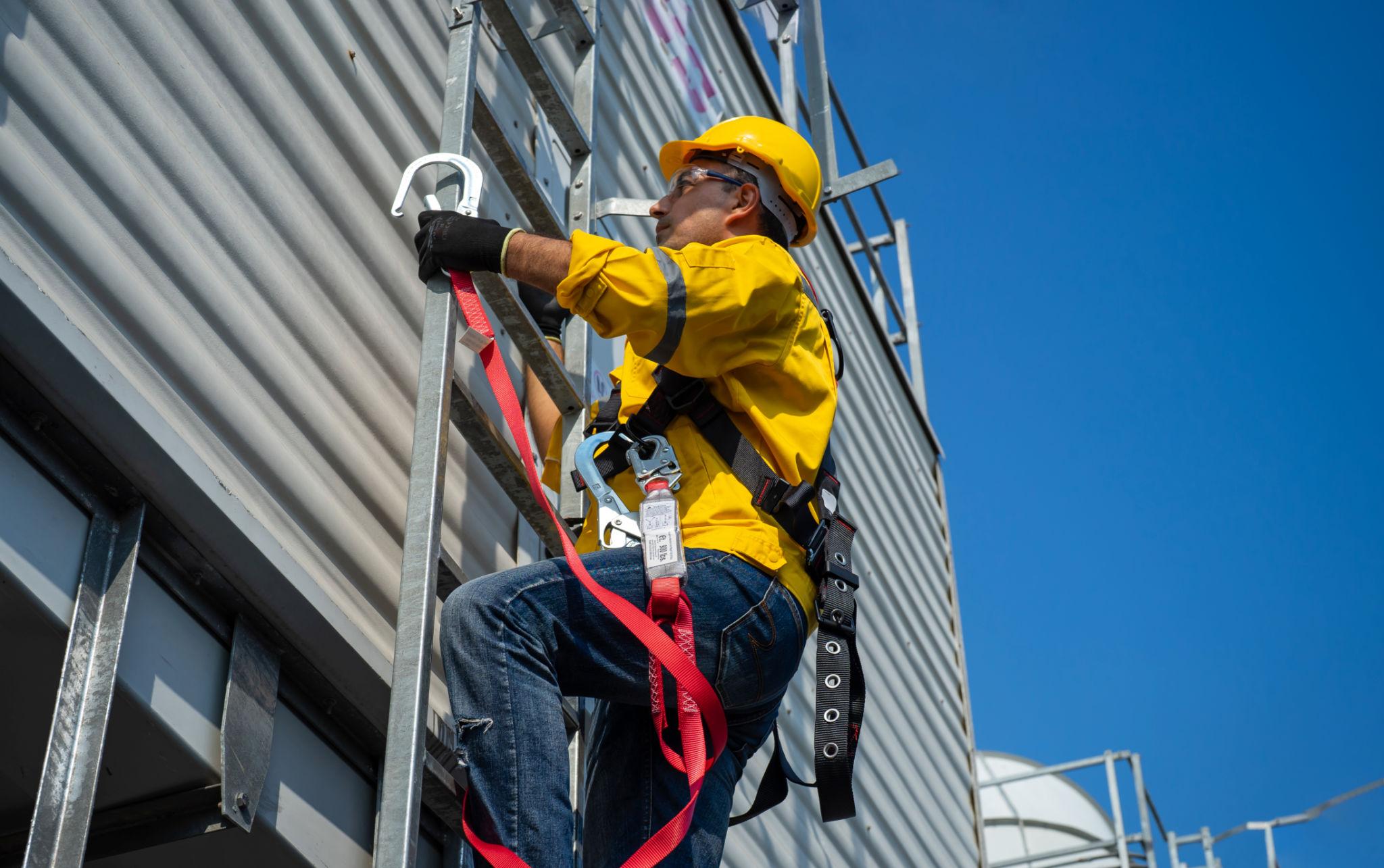
Detailed Hazard Mechanisms:
- Loss of balance due to improper body positioning, overreaching, or sudden movement
- Unprotected edges (roof perimeters, open shafts, mezzanines) without guardrails
- Failure of fall protection systems (incorrect anchorage, improper lanyard length, defective harness)
- Slips and trips at elevation, often caused by oil, dust, wet surfaces, or loose materials
- Structural instability, such as incomplete platforms or temporary working surfaces
- Human factors, including fatigue, complacency, and risk-taking behavior.
Critical Risk Amplifiers:
- Working above 2 meters (6 feet) without adequate protection
- Night shifts or low-visibility conditions
- Simultaneous operations (SIMOPS) causing distraction
- Inadequate supervision or absence of a permit-to-work system.
According to International Labour Organization guidance, most fall incidents are not due to a single failure but a chain of unsafe conditions and unsafe acts, emphasizing the need for layered controls.
Falling Objects (Dropped Object Hazard)
Dropped objects are a high-energy hazard capable of causing fatal injuries, even from relatively low heights. This risk is especially critical in multi-level work environments such as scaffolding, towers, and industrial plants.
Detailed Hazard Mechanisms:
- Tools and equipment falling due to lack of tethering.
- Improper stacking or unsecured materials at height.
- Mechanical failure (e.g., bolts, clamps, or lifting gear failure).
- Human error, such as accidental kicking or displacement of objects.
- Dynamic loads, where vibration (machinery, wind) causes displacement.
Energy Transfer Consideration:
A falling object’s impact force increases exponentially with height. For example:
- A 1 kg spanner dropped from 10 meters can generate enough force to cause fatal head injury.
Secondary Risks:
- Striking personnel below (line-of-fire hazard).
- Damage to critical equipment leading to secondary incidents (fire, explosion, system failure).
3. Fragile Surfaces (Hidden Structural Hazard) ⚠️
Fragile surfaces are particularly dangerous because they often appear safe but cannot support load, leading to sudden and catastrophic failure.
Common Fragile Materials:
- Asbestos cement sheets
- Fiber-reinforced panels
- Skylights and roof lights
- Corroded metal decking
- Aging or weather-degraded roofing systems
Failure Characteristics:
- No visible warning signs before collapse
- Sudden failure under point load (single footstep)
- Progressive collapse when load is distributed unevenly.
High-Risk Scenarios:⚡
- Maintenance work on industrial roofs
- Walking on non-load-bearing sections without identification
- Lack of load rating verification.
Incident Pattern:
Many fatalities occur when workers assume surfaces are safe and bypass fall protection systems, resulting in falls through the structure.
Weather Conditions (Environmental Risk Factor)
Environmental conditions significantly influence the risk profile of working at height and are often underestimated in planning phases.
Key Weather Hazards:
1. Wind Load Effects
- Loss of balance due to sudden gusts
- Increased instability of scaffolding and suspended platforms
- Swinging loads during lifting operations.
2. Rain and Moisture
- Slippery surfaces leading to loss of traction
- Reduced effectiveness of footwear grip
- Electrical hazards when combined with powered tools
3. Extreme Heat
- Heat stress causing fatigue, dizziness, and reduced concentration
- Increased likelihood of human error.
Extreme Heat
- Heat stress causing fatigue, dizziness, and reduced concentration
- Increased likelihood of human error
4. Cold and Ice
- Frozen surfaces leading to zero-friction conditions
- Reduced manual dexterity affecting grip and control
5. Reduced Visibility (Fog/Dust/Storms)
- Impaired hazard recognition.
- Increased risk during access/egress.
Compounding Risk:
Weather often interacts with other hazards, such as:
- Wind + unsecured tools = dropped object incidents.
- Rain + poor housekeeping = slip and fall events.
Occupational Safety and Health Administration (OSHA) requires employers to assess environmental conditions and suspend work when conditions become unsafe.